Monday, June 14, 2010

What are Diabetic Compression Socks?

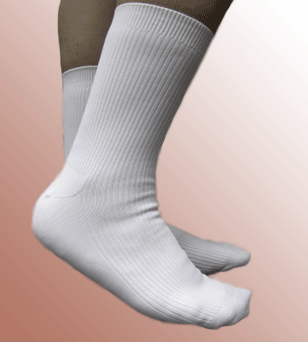
Diabetic Jobst support socks are thick and soft, lightweight and seamless, and are specially designed for people with diabetes or special needs such as those with nerve damage or tendency towards feet swelling due to poor circulation.

Diabetic socks can be made of 100% cotton or synthetic fibers, or a blend of both, and contain only a minimal amount of compression – just enough to keep them up all day. Unlike regular socks, they contain a comfortable elastic stretch top and no toe seams to allow for maximum circulation. They are made with breathable materials to draw heat away from the feet to prevent or reduce swelling.

Diabetic socks provide extra cushioning for the heel and toes, and are designed to be wrinkle-free so that there’s no bunching, which can place pressure on parts of the feet. Diabetes compression socks sometimes have an anti-microbial treatment built-in to prevent accumulation of bacteria and possible infection.

There are diabetic support socks for men, women and children, which are available in casual, sports and dress styles in a range of lengths (ankle-length, quarter length, and mid-calf). It’s important to purchase good-quality support socks from a trusted medical and compression socks manufacturer to ensure best results.

Monday, June 7, 2010

Accessories for Compression Socks

There are many accessories to help make it easier for you to don and doff your compression socks and varicose veins stockings.

Slip On Butler – A slip-on stand is the easy way to put your compression socks on in the morning. Simply slip the sock on the stand, and then insert your foot straight into the sock.

Compression Sock Aid Oval Extensor – This wire extensor is perfect for people with arthritis and limited bending capabilities to put on support socks.

Donning Rubber Gloves – Support socks are made of delicate material, so for a practical and protective way to put on your support socks, use donning rubber gloves.

It Stays Body Adhesive – If you want to make sure your support stockings stay put all day, try this non-irritating body adhesive to keep your stockings up without the need for garters.

Butler Off Doffing Aid – This doffing aid protects the stocking’s fabric and your skin when you remove compression socks. Simply slide the aid into your compression stocking, push it down to your heal, and slide the stocking off.

Mediven Leg Creams and Gels – Specially formulated creams and gels help tired legs recuperate and regenerate. Simply apply the formula to your legs at night after you remove your compression socks.

Monday, May 24, 2010

Do a Body Good with Fun Compression Hose

Compression hose often come in colors from the "boring" palette of navy, black, white, and taupe. Support socks might be recommended for anyone with poor circulation, from older people to pregnant women to those recovering from surgery to diabetics. The compression improves blood flow, prevents moderate leg swelling, and relieves and rejeuvenates tired or aching legs and calves. They are sometimes also used in sports and can be a great help on the golf course where long walks and periods of standing can lead to fatigue.

But for too long these vital wardrobe items have been treated as strictly functional items, and not as potential fashion accessories.

Thankfully, the new styles of compression socks are vivid and fun and come in every shade of the rainbow, from an audacious bright orange to a hot neon pink. The highly-popular Jobst support socks are also available in sheer and sexy styles.You won't want to hide them under a long skirt or pants! Show off your well-supported legs in a short skirt or shorts and strut down the sidewalk (or even just at home) with pizzazz.

Support and compression hose are now even available in fishnet and lace. These are not your grandma's support stockings!

Monday, May 17, 2010

The Dangers of Deep Vein Thrombosis

Deep Vein Thrombosis, or DVT, is the formation of a blood clot in a deep vein. It usually occurs in the leg, though they can occasionally occur in the arms or the pelvis.

Though sometimes occurring without symptoms, a DVT will usually become swollen and painful. Red or discolored skin, as well as a feeling of increased warmth, are also common symptoms.

Of course, since it is technically a blood clot, a DVT has the potential to be lethal. Any time a clot in a vein breaks loose and travels through the bloodstream, it has the possibility of reaching the lung. Though not likely, a DVT could potentially enter the bloodstream and lodge in a lung, causing a pulmonary embolism, a serious condition that can cause death.

It has been well-documented that a good compression stocking can be the key to averting circulatory problems such as Deep Vein Thrombosis (DVT). Since they are tight around the ankle and become looser as they go up the leg, compression stockings cause a gentle pressure up the leg, helping to prevent DVTs and other forms of blood clots.

Someone suffering from DVT should consult their doctor immediately. However, for someone concerned about the dangers of DVT, a pair of 8-15 mmHg or 15-20 mmHg compression stockings will go a long way in helping prevent this unpleasant condition.

Monday, May 10, 2010

Prescription or Non-Prescription Compression Socks?


Sometimes, varicose veins can cause more problems than one initially thinks. In addition to being unsightly, they can increase your chances of stroke related to blood clots. Varicose veins form because of faulty valves in the leg veins. Compression socks and compression hose, like Jobst support socks, are worn to facilitate proper blood flow towards the heart.

But how do you know if you need prescription socks or non-prescription socks? First off, it’s probably best to understand that compression socks don’t cure varicose veins, they just alleviate the symptoms that cause them, providing the wearer with better circulation in the legs. So in order to accurately gauge if your varicose vein problem is serious enough for prescription socks, it’s best to see a doctor or vein specialist. Prescription compression socks are hose are much like the OTC compression hose and socks, but they are tighter, making the treatment much stronger. If you don’t want to see a specialist right away, it’s best to try out regular compression socks and see if they make a difference. If you wear them for a few weeks and haven’t noticed a difference in your symptom, then you should take your concerns to a medical professional.

Tuesday, May 4, 2010

Benefits of Wearing A Pregnancy Belt


We’re well versed on the benefits of wearing seat belts, but most expectant mothers aren’t familiar with the health benefits associated with wearing a maternity support belt. Here’s what to expect: A strong, elastic brace sits around your back and under the belly to create a maternity support girdle by buttressing the bodily strain of pregnancy weight.

How Can A Pregnancy Belt Help?

  • Support. A maternity support belt assists the lower back in managing the weight of a mother’s stomach during the course of her pregnancy. The extra pounds greatly strain lower back muscles. Wearing a pregnancy belt alleviates direct stress on the back by structurally mitigating the way weight is carried.
  • Protect. A woman’s abdominal muscles are also compromised during the course of pregnancy. Not only does a maternity support belt protect the lower back from strain, but it also functions to compress the lower abdomen, protecting abdominal muscles from unhealthy stretching and tearing.
  • Recover. In preventing pain and muscle strain by deflecting the pressure of pregnancy, a maternity support girdle sets up new mothers for a speedy post-partum recovery. Through the benefits of compression, wearing a pregnancy belt post-delivery can heal overworked muscles, and help your body bounce back into shape sooner.

Wednesday, April 28, 2010

Fly Safe with Jobst Support Socks

Deep Vein Thrombosis (DVT) is a potentially fatal condition where large blood clots form in the legs as a result of periods of immobility, often due to long-distance travel. Older people, smokers, overweight people, pregnant women and people with a history of DVT are particularly at risk. Here are a few tips from the National Institutes of Health for safe long-haul air travel to avoid the chances of developing DVT.

Make sure you do some exercise while on the airplane. Get up and walk up and down the aisle at least every hour, and wiggle your legs, feet and toes while seated to encourage blood flow. Avoid crossing your legs and make sure you wear loose, comfortable clothing.

Wear compression socks, as directed by your doctor. Compression socks are a clinically proven aid which helps direct blood flow upwards and out of danger areas. Jobst support socks can help make any long period of travel more comfortable by preventing swelling in the legs.

Finally, drink plenty of water and avoid consuming alcohol. Depending on your individual health needs, your doctor may also recommend taking blood-thinning medication such as aspirin before traveling.